
TWO BOOKS.
ONE JOURNEY OF BEGINNING AGAIN.
You don’t have to be fearless. You don’t have to have everything figured out. You only have to be willing to take the next honest step.
Life doesn’t always follow the path we planned.
Sometimes we choose to begin again. We pursue a new goal, change careers, return to something we once loved, or finally attempt the thing we’ve been afraid to try.
Other times, beginning again is not a choice. An injury changes what our body can do. A career ends. A relationship changes. A diagnosis rearranges the future. The abilities, roles, and identities that once made us feel certain suddenly become unavailable, and we have to learn how to live inside a life we don’t yet understand.
Dan Messina has experienced both kinds of beginning.
Years ago, he chose to get back on a bicycle after becoming overweight, smoking heavily, and living a mostly sedentary life. He entered his first race before he was ready, finished far behind everyone else, and discovered how much of his life had become organized around avoiding the embarrassment of being bad at something.
Years later, after suffering a traumatic brain injury, he became a beginner again—this time in his own mind and body.
Together, Be Brave and The Long Road Back tell the story of what it means to begin, struggle, adapt, rebuild, and keep moving when the road no longer leads where you expected.
Begin with Be Brave. Continue the journey with The Long Road Back.
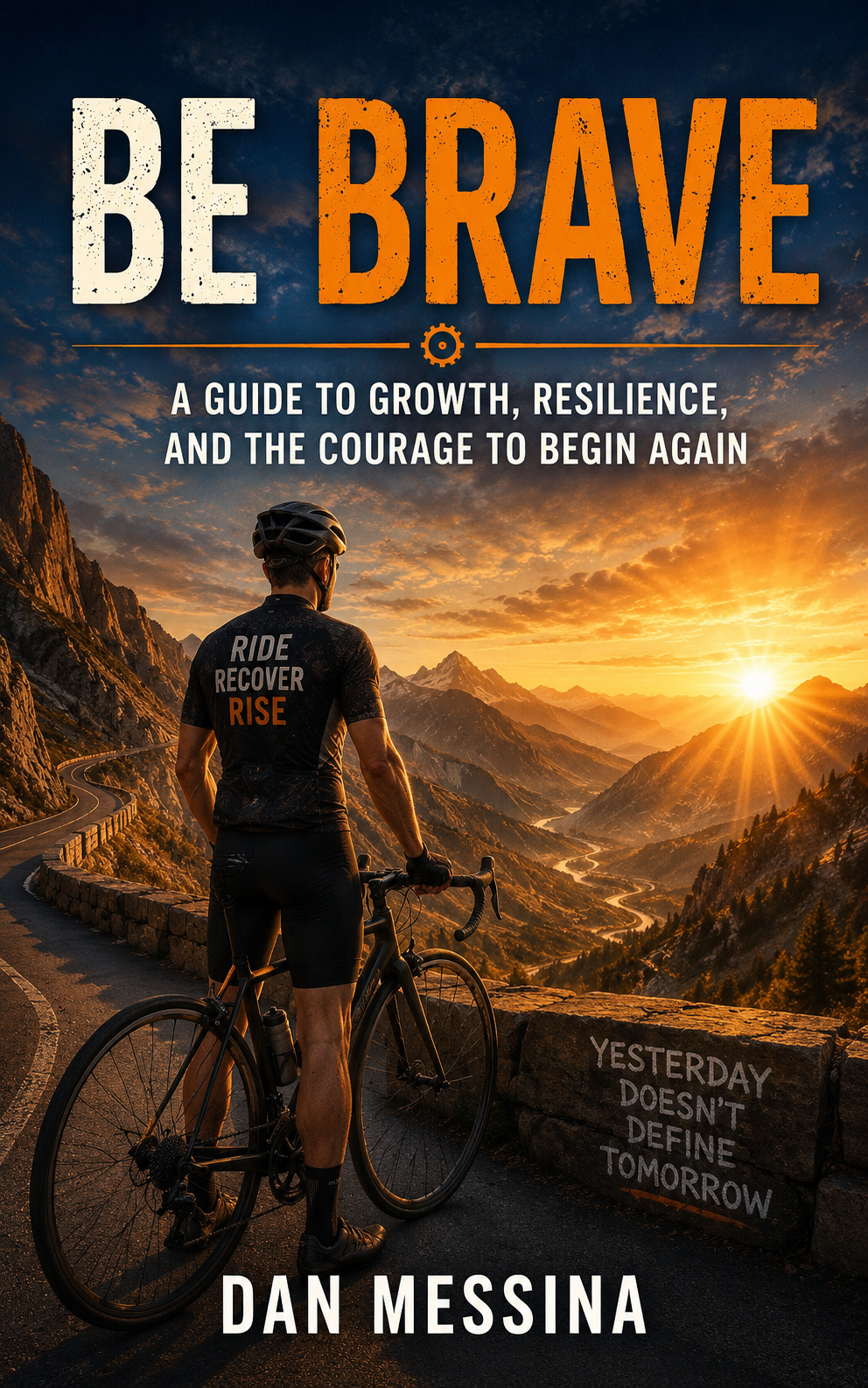
BE BRAVE
A Guide to Growth, Resilience, and the Courage to Begin Again
What would you attempt if you weren’t afraid of being bad at it?
Be Brave is the primary book in this two-book journey. It is a practical and deeply personal guide for anyone who feels called to change but has become trapped by fear, familiarity, comparison, or the pressure to appear competent.
Through stories from cycling, work, leadership, career reinvention, failure, and brain-injury recovery, Dan explores why beginning can feel so difficult—especially for capable adults who are accustomed to knowing what they’re doing. The longer we become known for being competent, the harder it can be to tolerate not knowing. We begin protecting the identity we have already built. We avoid unfamiliar opportunities. We delay action until we feel completely prepared. We tell ourselves the timing isn’t right when the deeper truth may be that we don’t want anyone to see us struggle.
Be Brave challenges that pattern.
It reminds us that every expert was once a beginner, that failure can become information rather than identity, and that progress is often happening long before it becomes visible. Courage is not the absence of fear. Courage is entering the room before you feel like you belong there. It is asking the basic question. It is sharing the imperfect draft. It is returning after a disappointing result. It is adjusting the plan without treating adaptation as failure.
Sometimes courage means continuing.
Sometimes courage means resting.
Sometimes courage means admitting that the destination no longer fits and choosing another road.
Inside Be Brave, You’ll Explore:
Why accomplished people become trapped by their own expertise
How to distinguish the Comfort Zone, Growth Zone, and Panic Zone
Why failure becomes useful when it is treated as information
How comparison can either teach us or slowly destroy our confidence
Why the difficult “middle miles” matter more than the exciting beginning
How to separate productive discomfort from pointless suffering
When perseverance is courageous and when changing direction is wiser
How injury, career disruption, and unwanted change can make us beginners again
Why psychological safety matters whenever someone is learning
How to become more than one version of yourself without rejecting the life you built before
This Book Is for You If:
You’ve wanted to try something new but stopped because you were afraid of looking foolish. You’ve stayed too long in a job, role, habit, relationship, or version of yourself because it was familiar. You’ve become more committed to appearing capable than becoming capable. You’re rebuilding after a setback, loss, diagnosis, career change, or major life transition. You’re leading people through change and want to create an environment where questions, mistakes, learning, and honest conversation are possible. You suspect you’re capable of more, but you’re still waiting to feel ready.
Be Brave doesn’t ask you to become exceptional at everything. It doesn’t demand that every interest become an achievement or that every hardship become an inspirational story. It gives you permission to begin.
To learn.
To struggle.
To change.
To become someone different from the person you expected to be.
You Don’t Have to Be Ready
The courage to begin rarely arrives as complete confidence. More often, confidence is built after we act—after we take the class, join the group, submit the application, enter the race, share the idea, or try again.
You do not need to see the entire road.
You only need enough courage for the next honest step.
THEN GO DEEPER
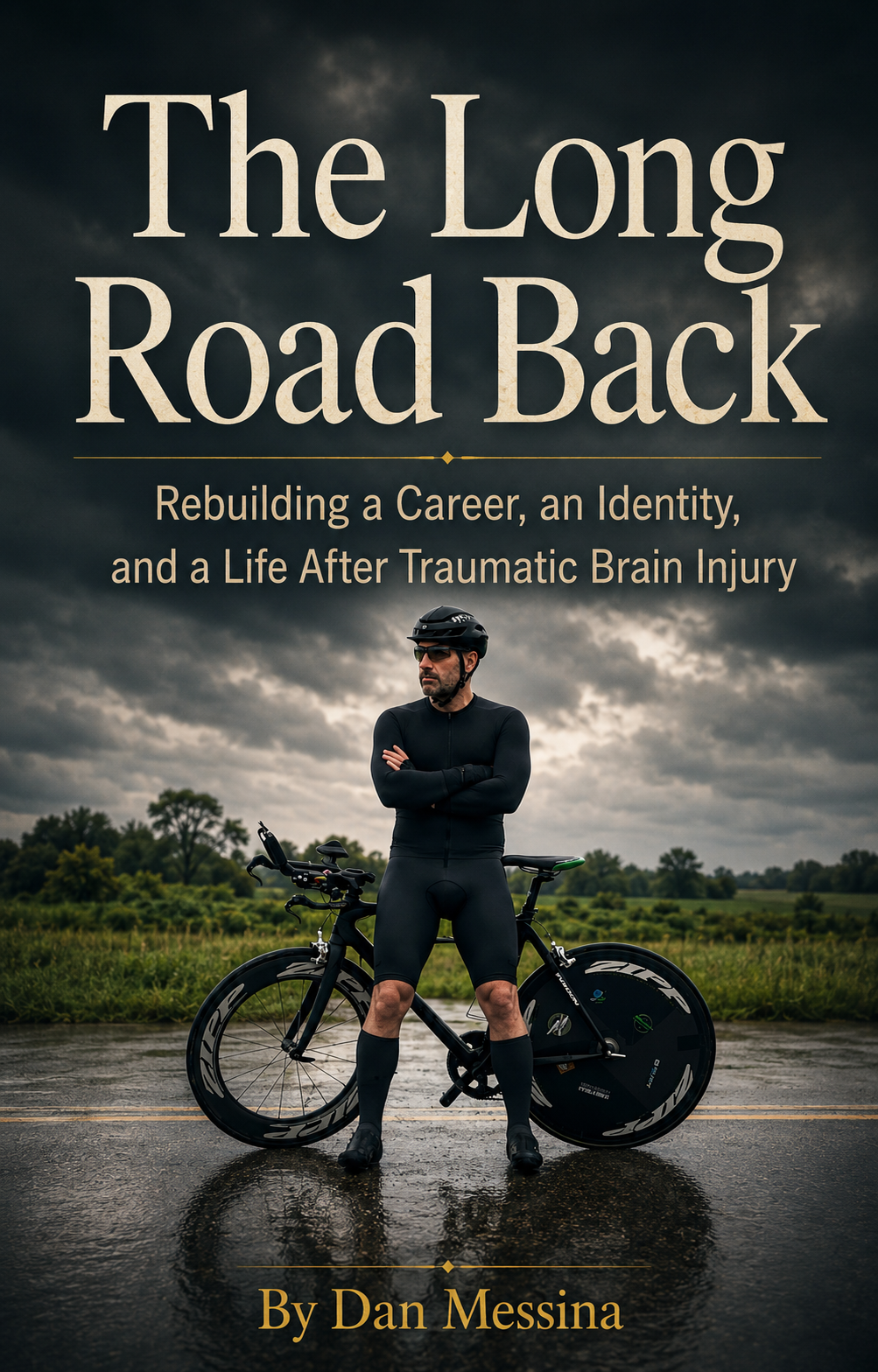
THE LONG ROAD BACK
Rebuilding a Career, an Identity, and a Life After Traumatic Brain Injury
What happens when the person who solves problems becomes the system he can no longer fully understand?
In 2021, Dan Messina experienced a traumatic brain injury. Before the injury, he had built a career around understanding complicated systems. He had diagnosed industrial equipment, redesigned business processes, led continuous-improvement initiatives, guided organizational transformations, and helped teams separate symptoms from root causes.
He knew how to identify a current condition, define a future state, build an action plan, measure progress, and help people move forward. Then the system he was trying to understand became himself.
There was no process map. There was no troubleshooting manual. There was no dependable timeline. There wasn’t even a reliable definition of what “normal” was supposed to mean anymore.
The Long Road Back is the companion to Be Brave and a deeper expansion of the brain-injury recovery story introduced in the primary book. It examines the invisible, unpredictable, and deeply personal work of rebuilding memory, confidence, capacity, career, independence, and identity.
This is not a medical guide, and it is not a polished recovery story in which something terrible happens, the correct lesson is learned, and everything returns to normal before the final chapter.
Recovery rarely works that way.
When Pushing Harder Stops Working
Before the injury, perseverance had been one of Dan’s greatest strengths. Cycling had taught him to continue when the road became steep, to tolerate discomfort, and to keep turning the pedals when every reasonable part of the body suggested stopping. His career had rewarded the same instinct. He became the person people called when problems became difficult. He could absorb pressure, organize chaos, connect technical issues to business decisions, and remain calm when the path forward was unclear.
Those qualities helped him become an athlete, advance his career, and accomplish things that once seemed impossible. They also complicated his recovery. The voice that had pushed him through difficult rides began telling him he wasn’t trying hard enough.
The problem-solving mindset that had helped him diagnose industrial systems insisted that recovery was simply another problem he had not yet solved. The identity built around usefulness made asking for help feel like failure. Recovery required a different definition of courage. It required learning that pushing harder is not a universal strategy.
That stopping is not always quitting. That rest is not weakness. That changing the plan does not prove you lacked commitment.
Sometimes it proves you finally started paying attention.
Recovery Is Not Necessarily Restoration
At first, Dan approached recovery as a return-to-normal project.
Success meant getting the old tools back. Thinking at the same speed. Carrying the same workload.
Riding with the same confidence. Performing in the same environments. Returning to the same career trajectory.
Over time, he began to understand that recovery and restoration are not always the same thing.
Restoration attempts to reproduce what existed before. Recovery may require building something that did not exist before.
That distinction changed everything. The goal was no longer to recreate the exact person who existed before the injury.
It was to understand the person who was here now—what remained, what had changed, what needed different conditions, and what kind of life could be built around reality rather than expectation.
The Invisible Cost of Looking Fine
One of the most difficult realities of traumatic brain injury is that the struggle may remain invisible until the exact moment a person cannot do what others expect.
Someone may complete a meeting, write a report, attend an event, or carry on a conversation without anyone seeing the cost. They may appear capable while privately calculating the energy required for every task. That invisibility creates difficult questions:
Can I trust my memory?
Can I trust my energy?
Can I make a commitment today without knowing what it will cost tomorrow?
Will asking for help change how people see my competence?
Am I recovering too slowly?
Am I struggling—or simply failing to try hard enough?
The Long Road Back explores these questions without forcing them into easy answers.
It shows why honest communication matters, why systems cannot respond to information they do not have, and why support becomes possible only when people are allowed to respond to reality rather than the performance someone is struggling to maintain.
Inside The Long Road Back, You’ll Explore:
The emotional impact of losing trust in your own abilities
The difference between visible performance and invisible cost
Why capability includes sustainability, limits, and operating conditions
How productivity becomes dangerous when it carries too much identity
Why acceptance is information rather than surrender
How continuous-improvement thinking can support personal recovery
Why being needed is not always the same as being valued
How career identity changes when capacity becomes unpredictable
The difference between surviving a demand and sustaining it
Why rebuilding may require reinvention rather than restoration
How to carry the past without allowing it to define the entire future
More Than a Brain-Injury Story
Although the book centers on traumatic brain injury, its questions extend far beyond one diagnosis.
Who are we when we can no longer perform the role that once made us feel valuable?
What happens when success and alignment are no longer the same thing?
How do we rebuild a career while we’re still rebuilding the person who had the career?
How do we move forward when forward may never look exactly like it did before?
These questions belong to brain-injury survivors, but they also belong to people living through illness, disability, burnout, grief, job loss, retirement, career disruption, caregiving, and every experience that divides life into a before and an after.
The Road Back Becomes a Road Forward
For a long time, Dan believed recovery meant closing the distance between the injured version of himself and the person he had been before. Eventually, he realized he wasn’t traveling backward. There was no road to the exact life that existed before the injury. Even if every ability returned, he would still know things he had not known then:
That identity can become too dependent on performance. That being able to endure something does not make it sustainable. That a person’s worth does not disappear when capacity changes.
That the strongest plan is the one capable of changing when reality changes. That different does not mean diminished. The long road back became a road forward.
WHY READ BOTH BOOKS?
Be Brave Gives You the Framework.
The Long Road Back Takes You Deeper Into the Experience.
These books are connected, but they serve different purposes. Be Brave is the broader guide. It explores what it means to become a beginner, move through fear, learn from failure, survive the middle miles, and build the courage to change.
The Long Road Back is the focused companion. It slows down inside the brain-injury experience and examines what those lessons look like when progress becomes unpredictable and the old definitions of resilience no longer work.
Be Brave says failure is information.
The Long Road Back explores how difficult it is to interpret that information when your own memory, energy, and judgment feel uncertain.
Be Brave introduces the Growth Zone.
The Long Road Back shows what happens when the Growth Zone changes depending on the day, environment, duration, and demands.
Be Brave asks when to persevere and when to pivot.
The Long Road Back demonstrates why pacing, rest, support, and adaptation can sometimes be more courageous than pushing through.
Be Brave encourages you to become more than one version of yourself.
The Long Road Back examines the grief, uncertainty, and possibility involved in releasing the demand to restore the person you were before.
Be Brave is about beginning again.
The Long Road Back is about beginning again when you never wanted the old beginning to end. Read together, the books offer a complete journey—from choosing change to responding when change chooses you.
A MESSAGE FOR SURVIVORS, FAMILIES, CAREGIVERS, AND COLLEAGUES
Recovery is not experienced by one person alone. Families live with uncertainty. Caregivers carry responsibilities that may be difficult to explain. Friends want to help but may not know what support looks like. Colleagues may see someone who appears recovered without understanding the energy required to perform ordinary tasks. Leaders may unintentionally design expectations around the person who existed before the injury rather than the person standing in front of them now. These books offer language for those conversations. They show why belief without pressure matters.
Pressure says, “You should be better by now.” Empty reassurance says, “Everything will be fine.” Belief says, “I see how hard this is, and I’ll stay with you while you work through it.”
Sometimes the most important thing we offer another person is not advice.
It is the safety to tell the truth.